Google Gemini Agent for Work (2026): What It Does, Availability and Business Risks
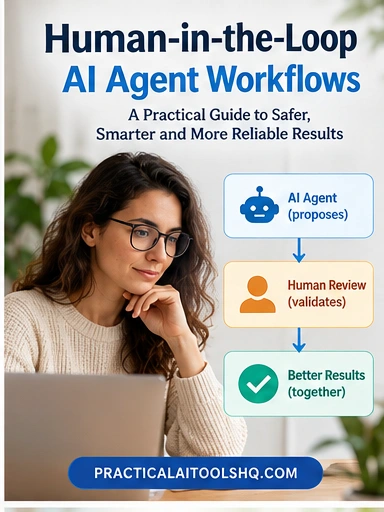
On October 8, 2026, Google Cloud announced a new Gemini agent for work at its Gemini at Work event. The headline is ambitious: instead of switching between separate AI chatbots, businesses would be able to delegate a task to one agent that works across documents, messages, calendars, data and code. But what has Google actually announced, who can use it, and what should a small business check before adopting it?
What Google announced on October 8, 2026
In its official keynote, Google described Gemini as a universal work agent that can answer questions, plan and carry out multistep tasks, generate content, work with code and coordinate other agents. Google says it can use business context and connect with the applications employees already use. This is a product announcement and vendor description, not an independent assessment of reliability or return on investment.
What can the Gemini agent do?
Work across familiar applications
Google described integrations with Gmail, Drive, Docs, Sheets, Slides, Chat and Calendar, as well as access from devices and other enterprise tools. A possible workflow is to collect project updates, draft a summary and prepare a slide deck without asking a person to repeat the context at every step. Whether a particular action is enabled will depend on your organization’s settings and permissions.
Delegate longer tasks
Google says the agent can continue cloud-based work after a user closes a laptop. That differs from a traditional chat interaction that ends when the user leaves. Persistent execution is useful for lengthy research or document preparation, but it also makes cancellation, logging and approval controls more important.
Coordinate specialized agents
Another announced capability is orchestration: a main agent may delegate subtasks to temporary specialized agents. Google also describes coworker agents with their own identity, workspace resources and restricted access. Businesses should not assume such a digital coworker has the same judgment or accountability as a human employee.
Choose models and manage costs
Google says its agent can route work across models, including its own model family and supported third-party models. It also described spend caps and monitoring. This could help teams avoid using expensive models for routine work, but actual savings will depend on workload, licensing and deployment details.
Gemini agent vs Gemini Enterprise: what is different?
Gemini Enterprise is Google’s wider platform and environment for developing, deploying and governing business AI agents. The newly announced Gemini agent is a unified work experience built on that enterprise direction. Think of the platform as the management and integration layer, while the agent is a way users assign outcomes across applications. Google previously expanded Gemini Enterprise in April 2026, so the October announcement should not be mistaken for the first appearance of business AI agents in its portfolio.
Who can use it now?
Google’s October 8 announcement focuses on enterprise workflows and customers. Rollout stages, geography, licensing, administrator enablement and preview restrictions may vary. The announcement alone does not establish that every consumer Gmail user or every small-business subscription has immediate access. Check the official product and administrator documentation before purchasing or promising the feature to employees.
Three real business use cases to evaluate
1. Meeting preparation
An assistant could assemble the latest approved project documents, summarize outstanding questions and draft an agenda. A human should check the attendee list and approve invitations before they are sent.
2. Weekly reporting
An agent might combine approved sales exports with operational notes, identify missing data and prepare a draft report. The report should show its data sources and assumptions, especially when numbers influence spending decisions.
3. Customer support triage
Agents can help categorize incoming requests and propose replies. Sensitive requests, refunds, account changes and commitments to customers deserve explicit human review and carefully scoped permissions.
Security, permissions and practical limits
Google’s announcement emphasizes agent identities, authorization, audit trails, sandboxing and policy controls. Those are important architectural features, but they are not a substitute for company governance. Before connecting a mailbox or document repository, inventory the data an agent can read, define actions it may take, and require approval for sending messages, deleting records, moving money or changing access rights.
Prompt injection remains a practical concern whenever an agent reads untrusted documents or webpages. A malicious instruction embedded in retrieved content should never override your business rules. Test with low-risk tasks first, use least-privilege access and review logs. For a broader checklist, read our AI agent permissions checklist and our guide to AI agent security risks.
What to verify before rollout
- Which product tier and geographic rollout actually include the agent?
- Which integrations are supported and which are still in preview?
- Can administrators require human approval for external sends and destructive actions?
- Are audit logs exportable, and how long are they retained?
- What are the subscription, model, connector and usage costs?
- Can the company revoke access and stop a long-running task quickly?
Frequently asked questions
Is Gemini agent the same as the Gemini chatbot?
No. The October 2026 announcement describes a broader enterprise work agent that can use tools, workflows and organizational context.
Can it send emails?
Google describes work across Gmail and other Workspace applications, but specific actions depend on rollout and administrator permissions.
Does it replace employees?
It is marketed as a productivity tool. Human accountability, judgment and approval remain necessary for consequential work.
Is it available to everyone?
Do not assume so. Verify the latest availability and plan requirements with Google.
Can it use models other than Gemini?
Google says its enterprise orchestration can route tasks across supported model families, including certain third-party models.
Is business data automatically safe?
No system eliminates risk. Review configuration, retention, permissions, logs and contracts for your particular deployment.
Bottom line
Google’s Gemini agent announcement is an important signal that enterprise AI is moving from chat toward delegated workflows. The immediate decision for businesses is not whether the demonstration looks impressive, but whether access, permissions, auditing and costs match a real use case. Start with a reversible, measurable task.
Sources: Google Cloud announcement, October 8, 2026; Gemini Enterprise platform overview, April 22, 2026.