
Mistral Large 4 entered public preview on October 6, 2026, giving developers and businesses a new European option in the race for advanced AI. Mistral says the model combines reasoning, coding, multimodal understanding and agentic workflows with a plan to publish its model weights later this month. But the most important question for a company is not whether the model tops a benchmark. It is whether Mistral Large 4 can perform real tasks reliably, securely and at a competitive total cost.
Here is what has been announced, what is available today, and how to decide whether the model deserves a place in your AI stack.
Mistral Large 4 at a glance
- Announcement: October 6, 2026.
- Access today: Public preview through the Mistral API and Mistral Studio.
- Architecture: A mixture-of-experts (MoE) model with roughly one trillion total parameters and 49 billion active parameters, according to Mistral’s launch announcement.
- Inputs and tasks: Multimodal understanding, reasoning, coding and agent workflows.
- Languages: Training included material spanning more than 160 languages, according to Mistral.
- Open weights: Promised for later in October 2026; they were not generally released as of October 8.
What is Mistral Large 4?
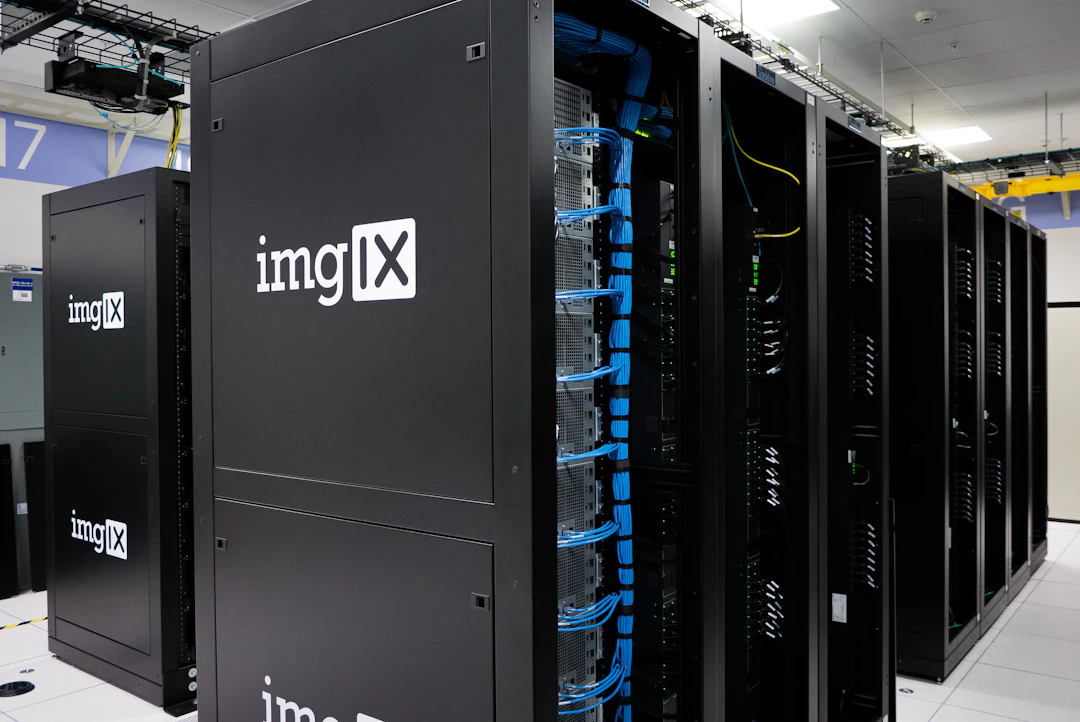
Mistral Large 4 is Mistral AI’s new flagship general-purpose model. Its mixture-of-experts design activates only part of a much larger network for each request. That distinction matters: the headline figure of roughly one trillion parameters describes the overall model, not the number of parameters used simultaneously for every token. Mistral’s launch announcement lists 49 billion active parameters.
The company describes the system as natively multimodal, meaning it is built to reason over visual information as well as text. It also targets workflows in which an AI assistant uses external tools, retrieves information and works through a multi-step task. That does not mean every agent built on the model will be accurate or safe by default; application design still matters.
Mistral says the model was trained on 3,800 NVIDIA Grace Blackwell GPUs in its European data centers. This is particularly relevant to organizations evaluating vendors on regional infrastructure and deployment control, although each customer still needs to verify the actual region and contractual terms of its own service.
Is Mistral Large 4 available now?
Yes, as a public API preview. Developers can explore the model through Mistral’s official launch information and its developer platform. However, an API preview and a downloadable open-weight release are two different stages.
As of October 8, 2026, Mistral had announced that the model weights would be released later in the month. Teams planning a self-hosted deployment should wait for the actual weights, applicable license, hardware requirements and deployment instructions before committing infrastructure budgets. API price pages can also change, so use the official model documentation for current specifications and pricing instead of relying on older screenshots.
Five features that matter to businesses
1. Reasoning and coding in the same model
Engineering teams can evaluate Mistral Large 4 for code explanation, refactoring suggestions, documentation and debugging assistance. In production, the meaningful metric is the percentage of tasks completed correctly after tests and review—not how convincing the first answer sounds.
2. Multimodal document and image understanding
Visual inputs may help teams interpret diagrams, screenshots or documents that cannot be fully understood as plain text. Potential uses include equipment manuals, product documentation and internal reporting. Test low-quality images and ambiguous diagrams before trusting any deployment.
3. Agentic workflows and tool use
The model is intended to support systems that plan steps and invoke tools. That could help with internal research, ticket triage or structured reporting. But permissions must remain narrow: a model that can read records should not automatically be allowed to delete files, send messages or change customer data.
4. Multilingual capabilities
Mistral reports that its training covered more than 160 languages. That makes multilingual customer-service and knowledge-base experiments appealing, especially for teams that operate across different countries. Coverage is not the same as uniformly high quality: test the actual languages, terminology and dialects used by your customers.
5. A path toward greater deployment control
The forthcoming open-weight release may allow qualified organizations to operate the model on their own infrastructure, subject to the release terms. That flexibility can be useful where data governance or customization is a priority. It can also create significant infrastructure, security, update and maintenance responsibilities.
Realistic Mistral Large 4 business use cases

- Customer support: Draft responses using approved help-center sources, with escalation for billing, legal or sensitive cases.
- Software teams: Review code changes and suggest tests while leaving merge approval to engineers.
- Financial operations: Summarize reports and flag discrepancies for an analyst; do not treat generated figures as independently verified.
- Manufacturing and logistics: Search technical manuals and interpret workflow documentation, with expert checks for safety-critical instructions.
- Internal research: Combine document retrieval with synthesis, citations and a human check of primary sources.
Small businesses may find that a managed API is a more practical starting point than self-hosting a model of this scale. Larger teams with demanding privacy or control requirements can investigate the open-weight path once its operational details are public.
How does Mistral Large 4 compare with closed AI models?
It is too early to declare a universal winner against proprietary models from OpenAI, Anthropic or Google. Mistral reports strong results in areas including coding, cybersecurity, financial tasks and visual grounding, but vendor-selected benchmarks are not a substitute for independent testing. Different models may lead on different tasks, and a preview system may behave differently as it is updated.
For buyers, the relevant comparison is broader than raw benchmark scores. A closed API may be easier to integrate and operate, while open weights can offer greater deployment control if the license and hardware are suitable. Neither approach automatically guarantees data privacy, low cost or compliance. Evaluate the complete service and governance model.
If your organization is considering autonomous assistants, see our guide to AI agents versus automation for small businesses and our overview of AI agent security risks.
A practical checklist before adopting Mistral Large 4

- Define your use case. Select 30 to 100 representative tasks from your actual workflow, including difficult edge cases.
- Set acceptance criteria. Measure factual accuracy, instruction compliance, useful citations and the rate of human corrections.
- Compare alternatives fairly. Run the same tasks and review process across your current model and Mistral Large 4.
- Record total cost. Include input and output tokens, retries, application development, human review and, if relevant, hosting.
- Test speed and reliability. Check latency, timeouts and consistency under realistic workloads.
- Check security and governance. Review data handling, region, retention policies, tool permissions, logging and incident processes.
- Use a limited pilot. Start with read-only or low-risk tasks and require approval for consequential actions.
For systems that stay connected to business accounts, our article on always-on AI agents and privacy explains why continuous access deserves extra scrutiny.
Limitations and safety considerations
First, the model remains in preview. Availability, behavior, rates and final release details may change. Second, Mistral’s published performance comparisons reflect its stated evaluations; teams should seek independent evidence as it becomes available. Third, a large open-weight model is not necessarily inexpensive or simple to run locally, and “open-weight” is not automatically identical to “open-source” under every definition or license.
Finally, agentic capabilities introduce familiar failure modes: prompt injection, overbroad permissions, unreliable tool selection and incorrect actions based on unverified information. Use least-privilege credentials, isolate sensitive systems, log actions and add human approval where mistakes would be costly.
Frequently asked questions about Mistral Large 4
When was Mistral Large 4 announced?
Mistral introduced the model’s public preview on October 6, 2026.
Can developers use Mistral Large 4 today?
Yes. Mistral announced a public API preview. Review the official developer documentation for the latest availability and usage terms.
Is Mistral Large 4 open-source?
Mistral has promised an open-weight release later in October. As of October 8, the weights had not been generally released, so do not assume that a particular open-source license applies.
Can a small business run Mistral Large 4 on a laptop?
A model of this scale is not a typical laptop deployment. The eventual hardware requirements will depend on the available weights, quantization and serving setup. For most small teams, evaluating the hosted preview is the practical first step.
Is Mistral Large 4 better than ChatGPT or Claude?
There is no reliable one-size-fits-all answer. Compare the models using your own tasks, error rates, operational requirements and complete costs.
Does Mistral Large 4 support a long context window?
Mistral’s model documentation advertises a context window of up to one million tokens. Confirm the applicable limits and performance for your specific API configuration before designing workflows around that maximum.
The bottom line
Mistral Large 4 is worth watching—and worth testing—but not worth adopting blindly. Its public preview creates an immediate way to evaluate a major European model, while the planned open-weight release could eventually expand deployment choices. The sound business decision is to pilot it against specific use cases, compare results with alternatives, and revisit self-hosting only after the weights, licensing and production requirements are clear.
Sources: Mistral AI launch announcement (October 6, 2026) and Mistral model documentation. Information current as of October 8, 2026.