Updated September 27, 2026. Meta’s human-concierge system is an internal test, not a generally available Muse feature.
Meta is selling Muse on a powerful idea: tell an AI what you need, and it does the work for you.
But one of the most interesting experiments inside Muse introduces an unexpected participant — a human.
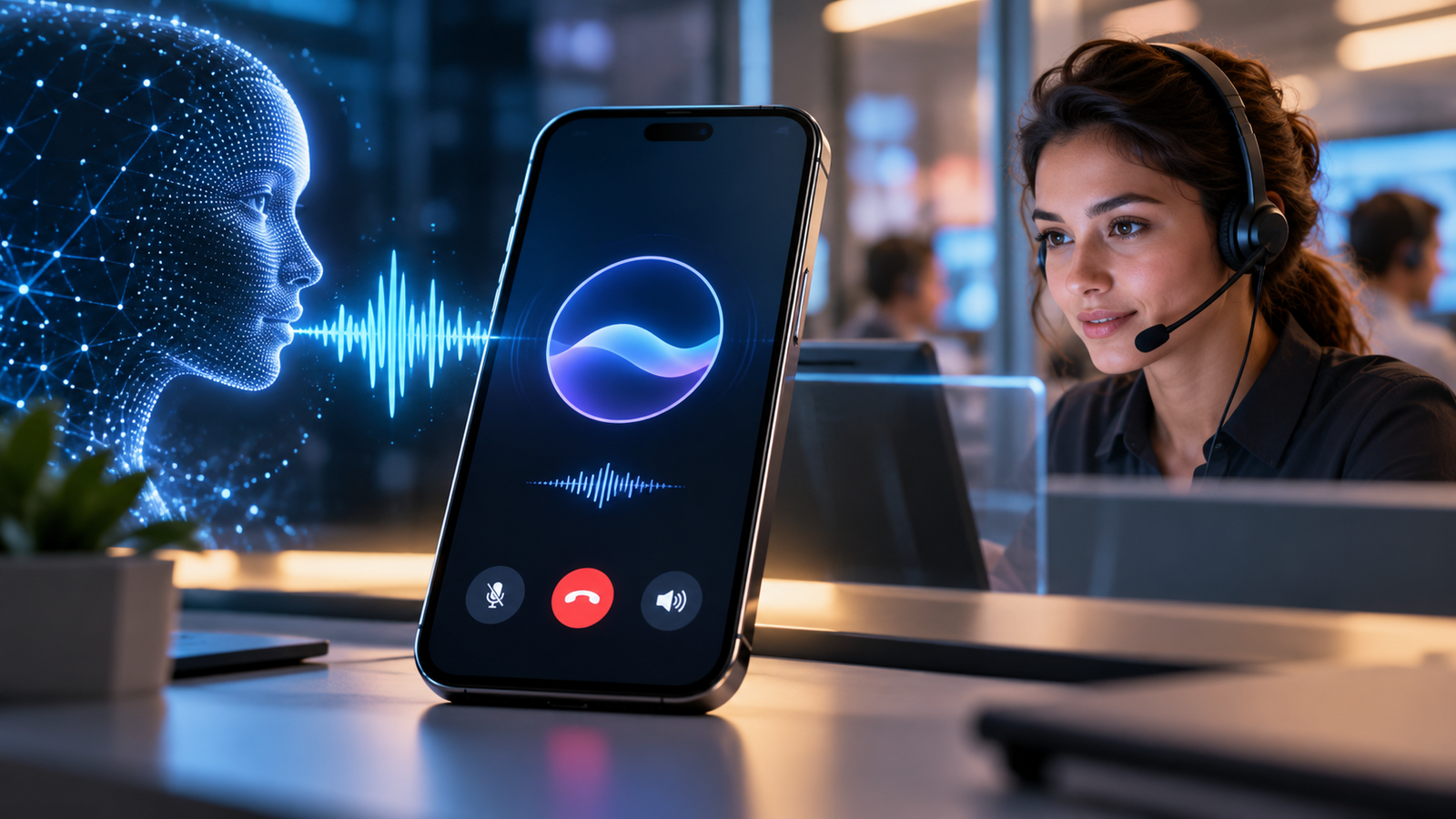
Reuters reported on September 22 that Meta is testing a “human concierge” system for Muse. In some internal tests, human contractors can handle phone calls that users delegate to the AI agent. That creates a fascinating question for the next generation of AI assistants: when you ask an AI to act for you, how much do you need to know about who — or what — is actually doing the task?
What Meta is actually testing
Muse already has the ability to place calls to businesses on a user’s behalf. According to Reuters, Meta has also been testing a human-concierge option internally, with human contractors taking over some calls.
The important distinction is that this is a test. Reuters reported that the human-concierge capability was made available to roughly half of Meta employees participating in the internal program, with an opt-out option. It has not been announced as a standard public Muse feature.
Meta told Reuters that the experiment is intended to help the company learn how to improve safety and privacy before any public release.
Why would an AI agent need a human?
At first, the idea sounds contradictory. If Muse is an AI agent capable of taking actions, why involve people at all?
The answer is that real-world tasks are messy.
A restaurant may not have online reservations. A repair shop may require a phone conversation. A hotel might ask an unexpected question. A local business may put the caller on hold, transfer the call or speak in a way that an automated system struggles to interpret.
AI can automate a growing number of those interactions, but a human fallback can potentially rescue a task when automation reaches an edge case. In AI development, this general approach is often described as “human in the loop”: software handles what it can, while people step in when judgment or flexibility is needed.
That could make an agent feel more capable to the user. But it also changes the privacy equation.
The privacy question is bigger than the phone call
Imagine asking an AI assistant to call a doctor’s office, negotiate a hotel problem or cancel a sensitive service. The user may reasonably assume the interaction is being handled by software.
If a human can become involved, transparency becomes critical: what information can that person see, what part of the conversation can they hear, what is retained, and when is the user told that a person is participating?
Reuters reported that some Meta employees raised privacy concerns about potentially sensitive information being exposed to human agents during the test. That does not establish that the eventual public system will work the same way. It does show why the experiment matters.
Meta’s public description of Muse emphasizes user control. The company says Muse runs inside a dedicated Muse Secure VM, that users choose which services it can access, and that a separate Sentinel agent checks actions before they reach the internet. Meta also says Muse asks for confirmation before sensitive actions such as sending an email or making a purchase.
Meta further says users can opt out of having their Muse interactions used to train its AI models, and that Muse conversations and VM data are not shared with Meta’s advertising systems.
This could become a defining issue for AI agents
The bigger story is not simply whether Meta uses contractors for some calls. It is what happens when AI agents move from generating answers to performing real actions.
A chatbot can give you a bad restaurant recommendation and you can ignore it. An agent can make the reservation. It can send the email. It can buy the item. It can talk to another person on your behalf.
As that boundary shifts, users will need to understand not only what an agent can do, but how the work gets done.
The winning AI agents may therefore be judged on more than intelligence. They may also be judged on whether they clearly disclose when automation ends and human intervention begins.
Muse is growing unusually fast
The experiment is especially notable because Muse is not a small research project. Reuters reported that the app passed 2.5 million downloads within roughly two weeks of launch and climbed to the top of U.S. app charts.
Meta launched Muse on September 8 as a personal AI agent that can handle tasks such as email, travel booking and shopping. The company is also extending Muse beyond the phone: at Meta Connect 2026 it announced integration with its AI glasses and introduced Muse Charm, a small dedicated device for interacting with the agent.
That expansion makes the trust question more important. The more places an agent appears — and the more services it can act across — the more consequential its permission and disclosure model becomes.
What users should watch for
- Clear disclosure: will Muse explicitly tell users whenever a human is involved?
- Data boundaries: what information can a human operator access during a delegated task?
- Opt-in or opt-out: will human assistance be optional if the feature reaches consumers?
- Task history: will the audit trail distinguish actions performed by Muse from actions performed by a person?
- Geographic rollout: privacy and labor rules could affect how such a service operates in different countries.
Bottom line
The most interesting thing about Meta’s human-concierge experiment may be the contradiction it exposes: making AI feel completely autonomous could sometimes require humans behind the scenes.
That is not automatically a weakness. Human backup could make AI agents far more useful when they encounter the unpredictable real world.
But usefulness is only half of the equation. If an AI assistant is going to represent us in conversations, purchases and everyday decisions, users need to know when they are dealing with a machine — and when another person has entered the loop.
Leave a Reply